

Trust is reputation and is the only currency that compounds without you in the room.
People don’t follow advice because it’s rational. They follow it because they trust the person giving it. A mediocre plan from someone you trust beats a brilliant plan from someone you don’t. This is true at work and it’s true at home.
How trust gets built
Minimize the gap between what you say and what you do. That’s the whole game. Every promise you keep narrows the gap. Every promise you break widens it. People aren’t tracking your intentions. They’re tracking your track record.
Say “I don’t know” out loud. A hiring manager I know used to tell his team: uncertainty isn’t the problem, hiding it is. If you’re not sure, say so, and give a caveat. “I think X, but I haven’t checked Y” builds more trust than a confident answer that turns out wrong. People forgive uncertainty. They don’t forgive being misled.
Never lie, even small. Small lies feel harmless because they’re small. But trust isn’t measured by the size of the lie. It’s measured by whether one was told at all.
Have you ever caught a whiff that someone was lying, even a little, and said nothing? You probably didn’t call it out. Most people don’t. But your brain quietly logged it. It adjusted that person’s trust score down a notch, without your permission and without a conversation. You just started weighing their next claim a little more carefully.
Other people are running the same silent calculation on you. Every small lie, even the ones nobody confronts you on, still gets scored. That’s what makes lying so costly. The damage happens whether or not anyone says a word.
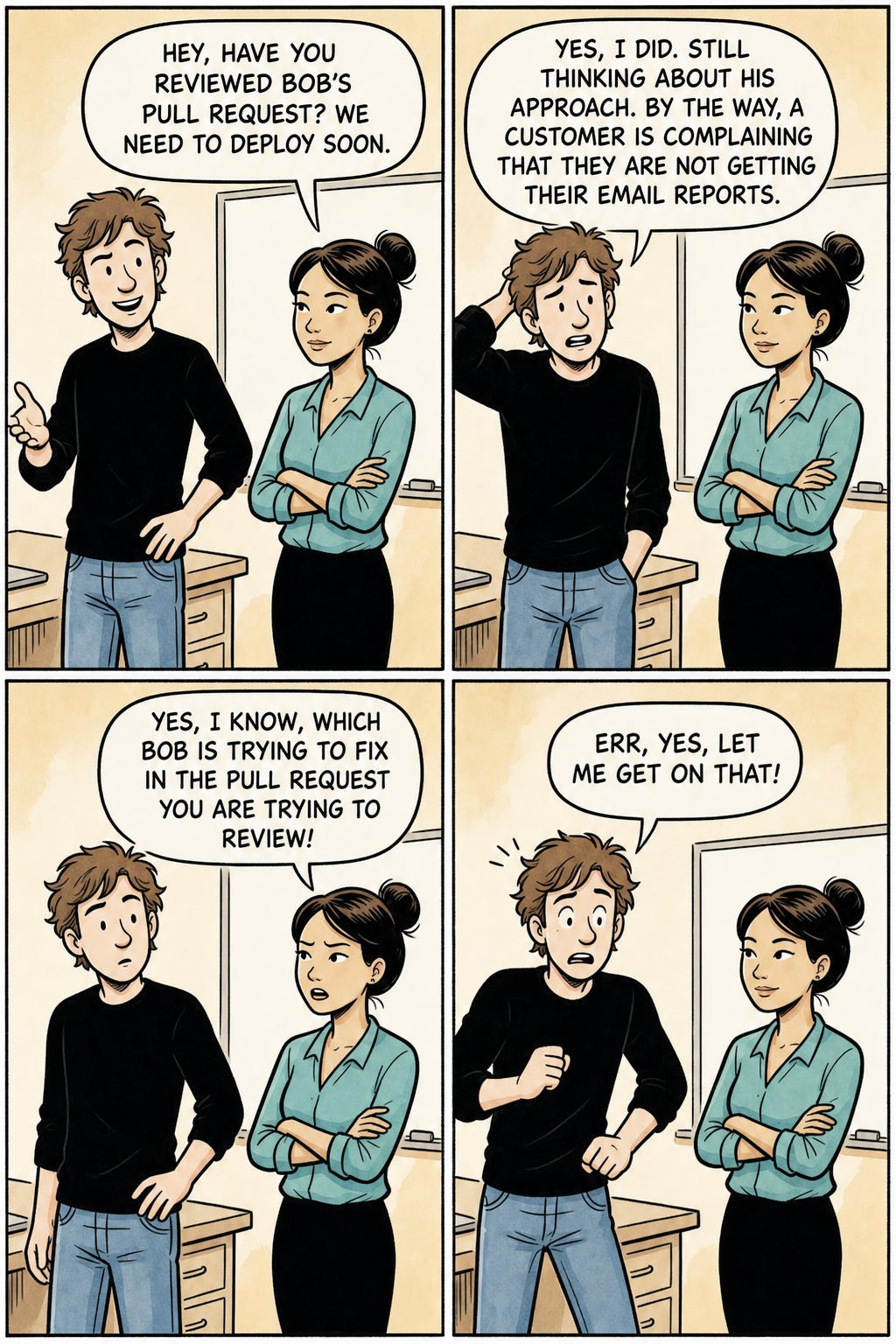
Show up the same way twice. Consistency is underrated because it’s boring. But a person who behaves the same way in a crisis as they do on a normal Tuesday is a person others can plan around. That predictability is trust.
At work
Your team trusts you based on whether your calendar matches your words. If you say a project is the priority and then miss its standups, the team notices before you do. If you tell a report they’re doing well and then pass them over for the promotion without explanation, that gap becomes the story people tell about you.
Trust at work is built in unglamorous moments: giving credit accurately, delivering hard feedback directly instead of through gossip, and admitting when a call you made was wrong.
At home
Same mechanics, higher stakes. Kids don’t trust parents because parents are always right. They trust parents who are consistent, who follow through on small promises, and who admit mistakes instead of covering for them.
Why trust is asymmetric
Trust takes years to build and seconds to lose. Worse, it’s not lost proportionally to the actual risk.
AI agents are, by the numbers, often more consistent than the humans doing the same task. But let an AI agent make one bad call, send one wrong email, book one wrong meeting, and it gets remembered longer than a thousand identical mistakes made by people. One error and the whole category gets labeled unreliable. We hold new or unfamiliar trust to a stricter standard than the trust we’ve already extended out of habit.
This means one visible break can undo years of consistency, especially with people who were still deciding whether to trust you in the first place. The people who trust you most will give you room to recover. The people who don’t yet will use the first crack as proof they were right not to.
That’s not a reason to be paralyzed. It’s a reason to be deliberate. Say less than you’re sure of. Do more than you promised. Let the track record speak.
These steps are important, and they can determine the level of success.
The part about the brain running a silent calculation and lowering a trust score without our permission is so accurate. We really do just quietly log those tiny shifts and carry them forward. Thanks for the practical breakdown, Z.