Slow is smooth, smooth is fast
Rushing creates chaos, while smooth, intentional movement, though it may seem slower, leads to faster, more efficient outcomes overall.
Slow is smooth, smooth is fast
Early in my career, I rushed a client presentation. Two hours of focused work became five hours of rework. Trying to save time cost me more of it.
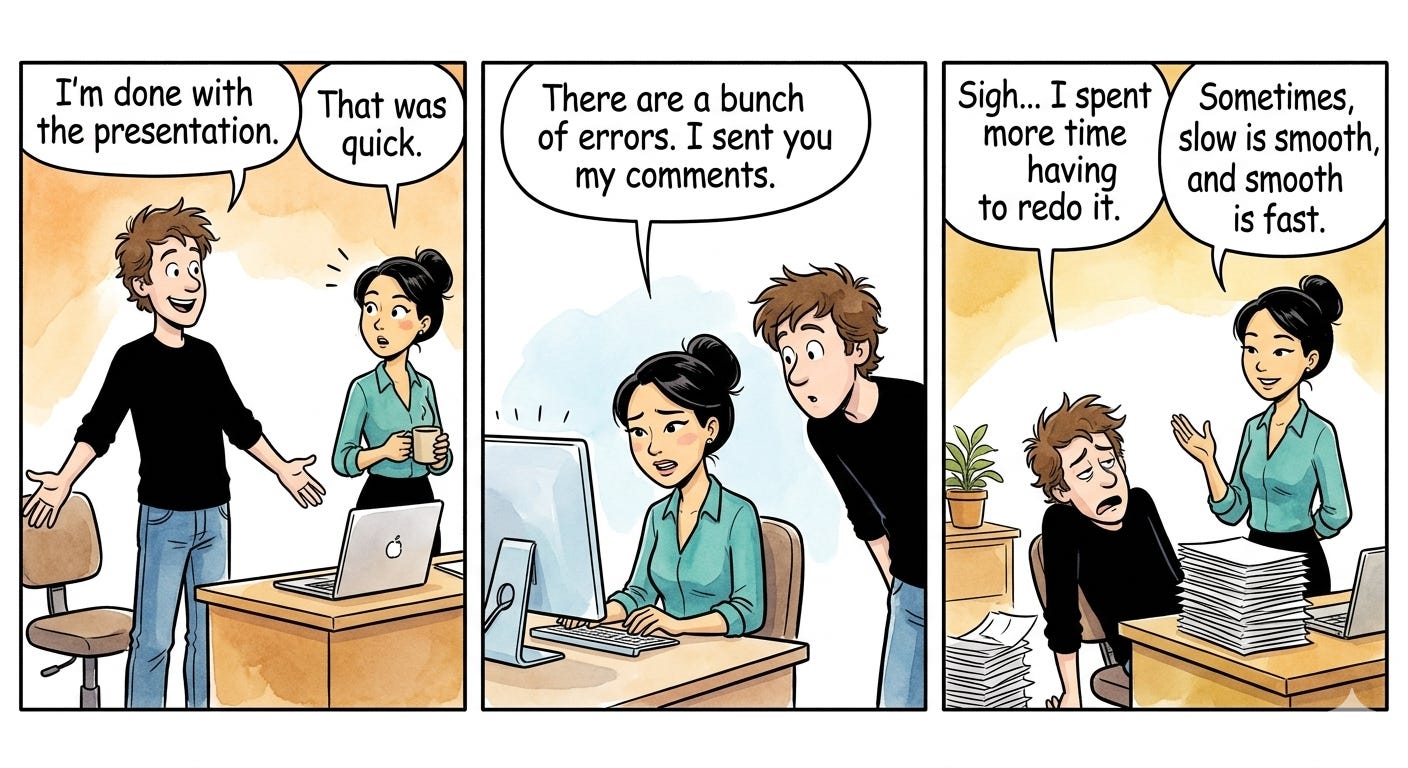
That’s the trap. Speed feels productive. Rushing feels like momentum. But chaos is expensive, and rework is the tax you pay for skipping the deliberate work upfront.
Navy SEALs have a saying: “Slow is smooth, smooth is fast.” It sounds like a paradox. It isn’t. Controlled, deliberate movement under pressure beats frantic speed every time. The same principle applies at your desk.
Find the 20% that actually matters
The Pareto Principle says 80% of results come from 20% of effort. Most people know this. Fewer people do the harder thing: identify which 20% before they start.
Before executing anything, define what has to be right. Functionality? Accuracy? Consistency? Once you know your non-negotiables, you can let everything else be “good enough” without guilt.
Add checkpoints before the deadline
Most reviews happen at the end, when it’s too late to course-correct cheaply. Add a peer check at the halfway point instead. Catching a structural problem at 50% costs a fraction of what it costs at 99%.
Systematize the routine
Templates, checklists, and standard procedures aren’t just time-savers. They reduce the cognitive load on decisions that don’t require judgment, so you have more capacity for the ones that do.
The real cost of rushing
Rework doesn’t just cost time. It drains confidence in your own process. Every time you redo something, you remind yourself that you didn’t get it right the first time.
Perfectionism is its own trap. But so is speed for speed’s sake.
The goal isn’t slow. It’s smooth. Get the rhythm right, and speed follows.


