

Your calendar has a recurring block for stand-up, for gym, for grocery pickup. It might even have a slot for the dentist because your dentist helped you schedule it from the last visit.
But it does not have a slot for “figure out if I’m still on the path I want.”
Daily routines are built to repeat but some of the most consequential things you do only need attention once or twice a year - the annual physical, the estate documents, the career check-in.
Unless you have a great manager, nothing forces those onto the calendar, so they lose to whatever’s loudest today. A Slack message beats “think about my career” every time, even though the Slack message rarely matters in six months and the career decision might shape the next five years.
What you need is a scheduled audit, the same way you’d schedule a doctor’s visit.
If you haven’t audited your career direction recently, do it now (or add it to your calendar).
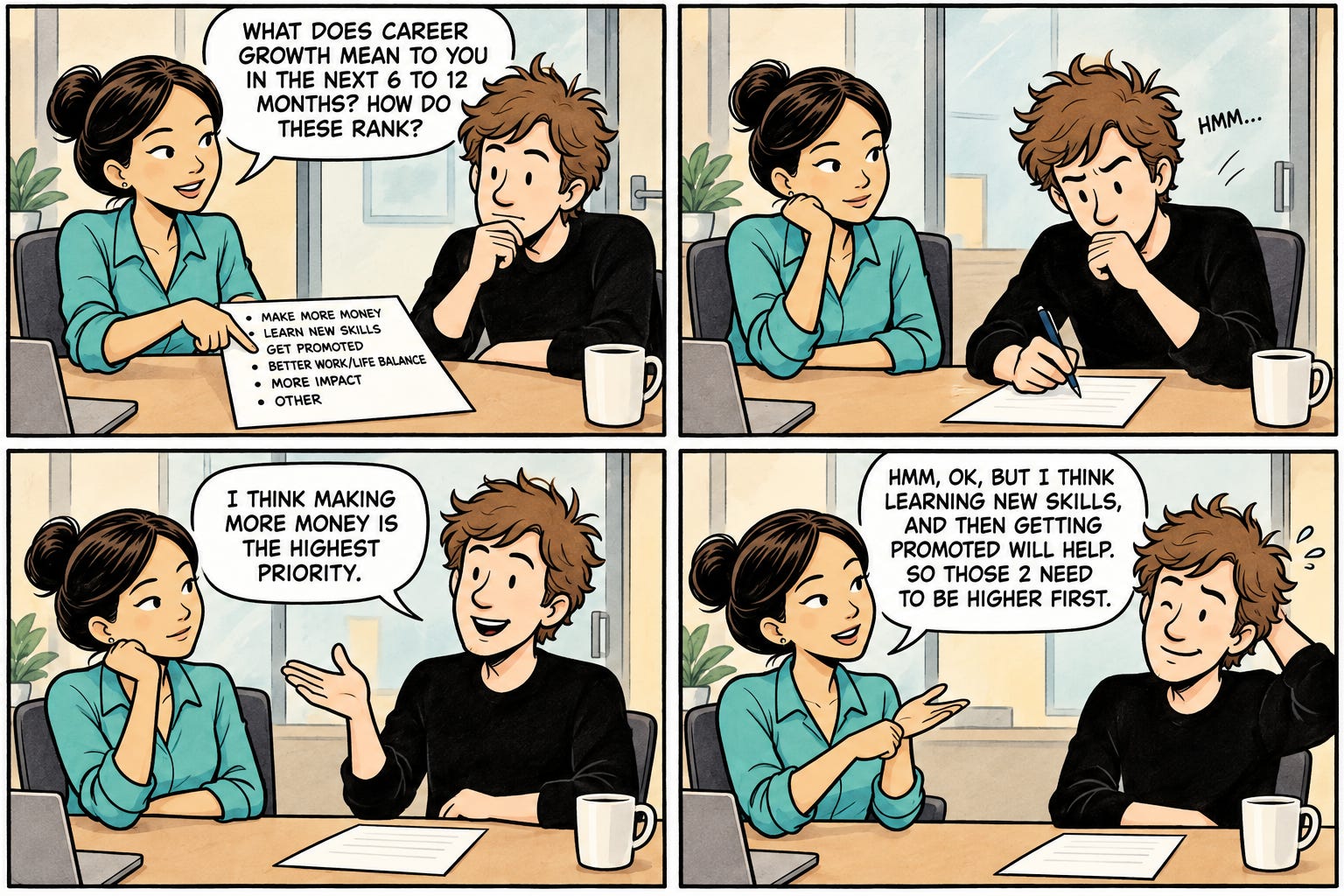
Start with what career growth means to you right now
Six months ago you might have been chasing a new skill. Today you might be chasing a promotion, or a raise big enough to put a down payment on a house. Both are legitimate goals. The problem is running last year’s plan because nobody told you the goal moved.
Ask yourself directly: what does career growth mean to me right now, not six months ago?
An exercise you can do is rank the potential options below:
Learning new skills — building capability now for options later.
More say in the work — choosing projects, having a voice in decisions, less “just execute.”
Promotion — the title and scope change, not just the paycheck.
Raise — same role, better pay. Often tied to a specific goal like a down payment.
Visibility and reputation — being known for something specific, inside or outside the company.
Better fit — a role, team, or manager that matches how you actually work best.
Stability or reduced stress — fewer fire drills, more predictability. Growth isn’t always “more,” sometimes it’s “steadier.”
Then audit where your time actually went
Pull up your calendar or your browser history for the last two weeks. Not your intentions, your actual time. Compare it to the answer above.
For me it’s always the same two leaks. I lose an hour (embarrassingly, sometimes 2) to YouTube and call it research. And I spend twenty minutes manually doing something I could hand to a Claude skill, then never build the skill because the manual version feels faster in the moment.
Neither one is a moral failing. They’re just time going to something other than what I said I mattered. That gap is the whole exercise.
Ten minutes, three questions
What does career growth mean to me right now, specifically?
Where did my time actually go this week?
What’s the gap, and what’s one thing that would close it?
You don’t need a system overhaul. You need to notice, on purpose, whose priorities filled your week. If the answer keeps being “not mine,” that’s worth more than another productivity hack.